-
Faculty of Arts and HumanitiesJakobi 2, r 116-121, 51005 Tartu linn, Tartu linn, TartumaaJakobi 2, 51005 Tartu linn, Tartu linn, TartumaaJakobi 2, IV korrus, 51005 Tartu linn, Tartu linn, TartumaaJakobi 2, III korrus, ruumid 302-337, 51005 Tartu linn, Tartu linn, TartumaaÜlikooli 16, 51003 Tartu linn, Tartu linn, TartumaaÜlikooli 18, 50090 Tartu linn, Tartu linn, TartumaaLossi 3, 51003 Tartu linn, Tartu linn, TartumaaPosti 1, 71004 Viljandi linn, ViljandimaaJakobi 2, 51005 Tartu linn, Tartu linn, TartumaaJakobi 2, 51005 Tartu linn, Tartu linn, TartumaaFaculty of Social SciencesLossi 36, 51003 Tartu linn, Tartu linn, TartumaaJakobi 5, 51005 Tartu linn, Tartu linn, TartumaaLossi 36, ruum 301, 51003 Tartu linn, Tartu linn, TartumaaNarva mnt 18, 51009 Tartu linn, Tartu linn, TartumaaNäituse 2, 50409 Tartu linn, Tartu linn, TartumaaNäituse 20 - 118, 50409 Tartu linn, Tartu linn, TartumaaLossi 36, 51003 Tartu linn, Tartu linn, TartumaaRaekoja plats 2, 20307 Narva linn, Ida-VirumaaLossi 36, 51003 Tartu linn, Tartu linn, TartumaaLossi 36, 51003 Tartu linn, Tartu linn, TartumaaFaculty of MedicineRavila 19, 50411 Tartu linn, Tartu linn, TartumaaBiomeedikum, Ravila 19, 50411 Tartu linn, Tartu linn, TartumaaNooruse 1, 50411 Tartu linn, Tartu linn, TartumaaL. Puusepa 1a, 50406 Tartu linn, Tartu linn, TartumaaL. Puusepa 8, 50406 Tartu linn, Tartu linn, TartumaaRavila 19, 50411 Tartu linn, Tartu linn, TartumaaUjula 4, 51008 Tartu linn, Tartu linn, TartumaaRavila, 50411 Tartu linn, Tartu linn, TartumaaRavila 19, 50411 Tartu linn, Tartu linn, TartumaaFaculty of Science and TechnologyVanemuise 46 - 208, 51003 Tartu linn, Tartu linn, TartumaaNarva mnt 18, 51009 Tartu linn, Tartu linn, TartumaaRavila 14a, 50411 Tartu linn, Tartu linn, TartumaaNarva mnt 18, 51009 Tartu linn, Tartu linn, TartumaaRiia 23, 23b - 134, 51010 Tartu linn, Tartu linn, TartumaaNooruse 1, 50411 Tartu linn, Tartu linn, TartumaaJ. Liivi tn 2, 50409 Tartu linn, Tartu linn, TartumaaRiia 23b/2, 51010 Tartu linn, Tartu linn, TartumaaVanemuise 46, 51003 Tartu linn, Tartu linn, TartumaaVanemuise 46, 51003 Tartu linn, Tartu linn, TartumaaArea of RectorArea of Vice Rector for Academic AffairsUppsala 10, 51003 Tartu linn, Tartu linn, TartumaaÜlikooli 18b, 51005 Tartu linn, Tartu linn, TartumaaÜlikooli 18a (III korrus), 51005 Tartu linn, Tartu linn, TartumaaArea of Vice Rector for ResearchW. Struve 1, 50091 Tartu linn, Tartu linn, TartumaaArea of Director of AdministrationÜlikooli 18, ruumid 102, 104, 209, 210, 50090 Tartu linn, Tartu linn, TartumaaÜlikooli 18A (III korrus), 51005 Tartu linn, Tartu linn, TartumaaArea of Head of FinanceÜlikooli 17, 51005 Tartu linn, Tartu linn, TartumaaArea of Vice Rector for DevelopmentLossi 25, 51003 Tartu linn, Tartu linn, TartumaaVanemuise 46, 51003 Tartu linn, Tartu linn, TartumaaNarva mnt 18, 51009 Tartu linn, Tartu linn, TartumaaArea of Academic SecretaryUppsala 6, Lossi 36, 51003 Tartu linn, Tartu linn, Tartumaa
Doctoral defence: Oscar Zárate Martínez "Soil microbial communities in changing landscapes: spatiotemporal patterns in arbuscular mycorrhizal fungi"

On September 4 at 10:15 Oscar Zárate Martínez will defend his doctoral thesis "Soil microbial communities in changing landscapes: spatiotemporal patterns in arbuscular mycorrhizal fungi" for obtaining the degree of Doctor of Philosophy (in Botany and Mycology).
Supervisors:
Professor Meelis Pärtel, University of Tartu
Professor Maarja Öpik, University of Tartu
Opponent:
Associate professor Karina Engelbrecht Clemmensen, Swedish University of Agricultural Sciences (Sweden)
Summary:
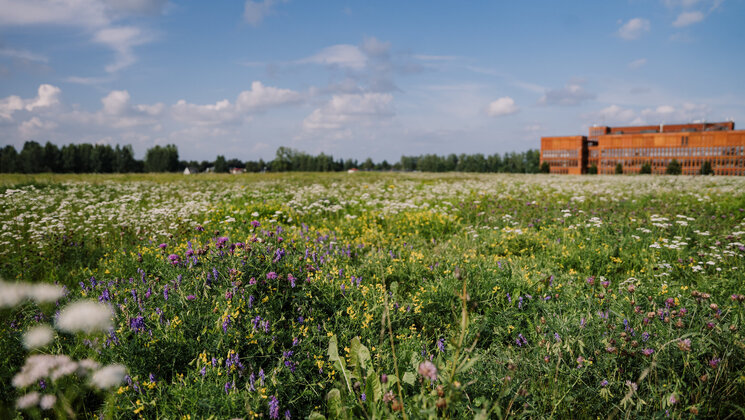
The soils around us are full of hidden life, although some landscapes support much richer microbial communities than others. Soil fungi and bacteria help plants grow, recycle nutrients and support healthy ecosystems. Yet these microbial communities are often overlooked when landscapes are changed by human activities. In my thesis, I studied how soil microbes are shaped not only by current conditions, but also by the history of the surrounding landscape.
I focused on arbuscular mycorrhizal fungi, a group of fungi that live in close association with plant roots and help plants obtain nutrients from the soil. I studied these fungi in agricultural fields, urban green spaces in the city of Tartu, and forests in Estonia. I also compared their patterns with those of other soil fungi and urban soil bacteria.
The results show that today’s soil microbial communities can still reflect what the landscape looked like in the past. In agricultural fields, the number of arbuscular mycorrhizal fungal species was higher where natural habitats, such as forests and meadows, had been nearby more than a century ago. In urban green spaces in Tartu, fungal diversity was higher in places that had been closer to grasslands in the past. In forests, some groups were more diverse where there was more forest around them, while others were more likely present where the surrounding landscape was less forested.
The thesis shows that not all microbial groups respond in the same way. Some patterns were related to past landscapes, while others were more strongly linked to current land use, soil nutrients or management. For example, urban soil bacteria were more diverse where plant diversity was higher and where there were more nearby woodlands.
My work highlights that soil biodiversity management should consider both past and present landscapes. Protecting and restoring grasslands, woodlands and other semi-natural habitats ca help maintain soil biodiversity that supports healthy ecosystems.
Read more similar news